

Many workplaces limped through 2025’s flu season with skeleton crews and back-to-back sick days. 2025 saw the highest number of lab-confirmed influenza cases in Australia since flu became notifiable in 2001, and the season stretched well into spring instead of winding down in September.
So with another season approaching, getting your office cleaning and disinfecting strategy sorted now could save you another massive disruption come winter.
This guide is for office, facility, and practice managers across the Hunter who want a workplace that holds up when everyone else’s is falling apart.
Key Insights
- 2025 was a record flu year driven by the H3N2 subclade K variant, and circulation continued into early 2026.
- Good office cleaning and disinfecting includes increased frequency for high-touch surfaces, hospital-grade disinfectants with proper contact time, and electrostatic spraying for outbreak response.
- Offices, medical centres, childcare and schools each need different protocols.
- Beyond cleaning, vaccination programs, sick leave culture, and clear hygiene policies help to prevent outbreaks and keep staff healthy.
Why Hunter Region Workplaces Need to Take Flu Season Seriously in 2026
The 2025 Australian flu season was the year influenza “surprised us.” More than 427,000 notifications hit the National Notifiable Diseases Surveillance System, and a fast-spreading H3N2 variant emerged in August and became a leading cause of respiratory deaths that month. By December, the Australian Health Protection Committee was issuing fresh public guidance because cases were still climbing into the holidays.
What does that mean for businesses? Reports found the average direct cost of absenteeism climbed to $4,025 per employee per year, with overall absence rates rising 23% on pre-pandemic levels. Data shows the absenteeism rate consistently exceeds 8% in winter compared to around 7% in summer, a clear seasonal spike driven by colds and flu. For a Hunter Region office of 30 staff, even a moderate flu wave can push project timelines back by weeks and force the rest of the team to absorb the workload.
There’s also the COVID factor. Despite the pandemic moving off the front pages, SARS-CoV-2 variants continue to circulate alongside flu and RSV, creating what surveillance teams now describe as a “tripledemic” pattern through winter.
What Office Cleaning and Disinfecting Should Look Like During Flu Season
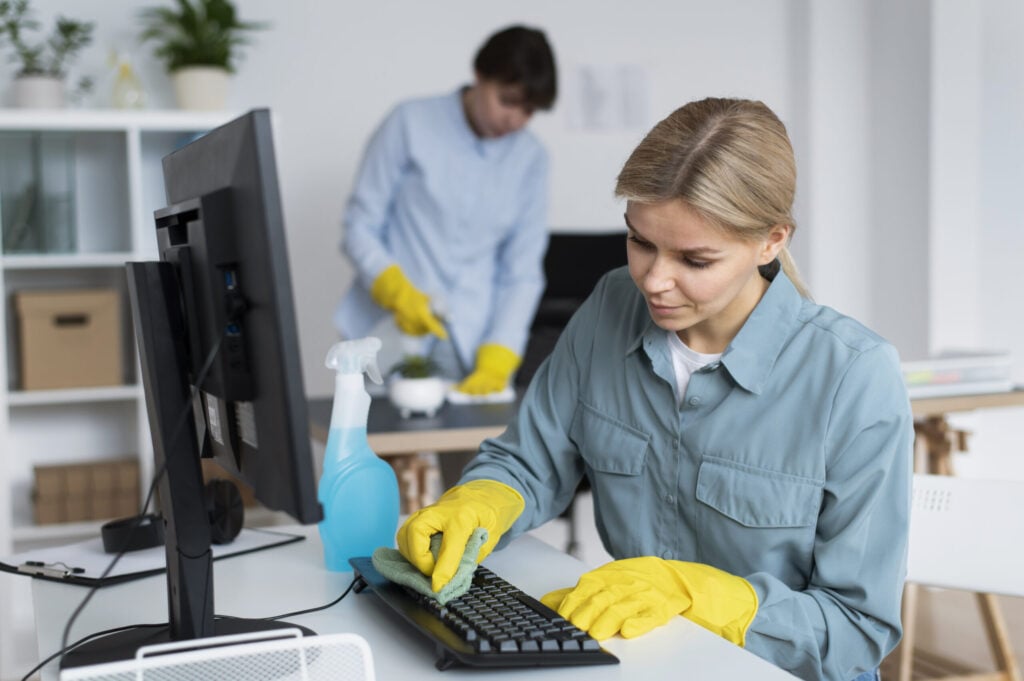
Your everyday clean is fine for a normal week, but it’s nowhere near what flu season demands. Two questions worth asking yourself before May:
- Is your current cleaner doing more than wiping down surfaces?
- Are they using products that actually kill influenza, with the right contact time?
High-Touch Surfaces Need Frequency, Not Just Attention
Influenza A and B can survive on hard, non-porous surfaces for 24 to 48 hours. On softer materials like fabric and tissues, survival drops to under 12 hours. That’s why high-touch points are the real battleground.
In a typical Newcastle office, the hotspots are:
- Door handles and push plates (especially main entry, kitchen and bathroom)
- Lift buttons in multi-storey buildings
- Shared keyboards, mice and phones in hot-desking setups
- Kitchen taps, fridge handles, microwave buttons and coffee machine touchpoints
- Meeting room tables, chairs and AV remote controls
- Bathroom taps, flush buttons and dispenser handles
- Stair rails and reception counters
During flu season, these need disinfecting at least daily, and in busy reception areas or shared kitchens, twice daily or more.
Disinfectant vs Sanitiser
A sanitiser reduces germs to safe levels. A disinfectant kills them. For flu season office cleaning and disinfecting, you need the latter – specifically a hospital-grade product registered with the Therapeutic Goods Administration (TGA) on the Australian Register of Therapeutic Goods (ARTG) and proven effective against Influenza A and B.
Most hospital-grade disinfectants also need to sit wet on a surface for several minutes to actually inactivate the virus. A spray-and-immediate-wipe approach often misses this completely. Any cleaner you work with should be able to tell you exactly what they’re using and how long they leave it on.
Outbreak Response: When Daily Cleaning Isn’t Enough
If a staff member tests positive for flu and has been in the office, electrostatic spraying can become helpful. This technology charges disinfectant droplets so they wrap around three-dimensional surfaces (chair backs, keyboards, equipment) far more evenly than a manual wipe-down. For a clinic or childcare centre dealing with confirmed cases, this kind of decontamination can be the difference between containing one infection and watching it spread through the whole team.
Different Workplaces, Different Needs
Generic flu-season cleaning advice falls flat the moment you walk into a paediatric clinic or a childcare room. The fundamentals are the same – frequency, the right products, contact time – but the application has to match the environment.
Office Cleaning and Disinfecting
Standard office cleaning in the Hunter Region during flu season should step up in three ways:
- Increased frequency on high-touch points
- Dedicated disinfecting passes (not just dust-and-vacuum)
- Stocked-up consumables – soap, hand sanitiser, paper towel, tissues
If your current service is tipping bins and wiping desks, you’re getting a basic clean, not infection control.
Medical Centre and Allied Health Cleaning
Practice managers running GP clinics, physio rooms, dental surgeries or specialist rooms are working under a completely different bar. Healthcare-associated infection risks, AS/NZS 4187 reprocessing standards, and the basic reality that sick people are walking through your waiting room all day mean cleaning needs to be hospital-grade as standard, not just in flu season.
Treatment rooms, examination tables, blood pressure cuffs, EFTPOS terminals and waiting room toys all need protocols that account for clinical risk. Our medical centre cleaning services are built specifically for this.
Childcare Centres and Schools
Children are some of the biggest flu transmitters – they catch it, share it, and take it home. Toys (especially anything that goes in mouths), nap mats, bathroom areas, kitchen surfaces and door handles at child height all need daily disinfection during flu season, with deep cleans built into the schedule when illness clusters appear. Our childcare cleaning services follow National Quality Standard (NQS) hygiene expectations and use products that are both effective and child-safe.
Workplace Flu Prevention Beyond Cleaning
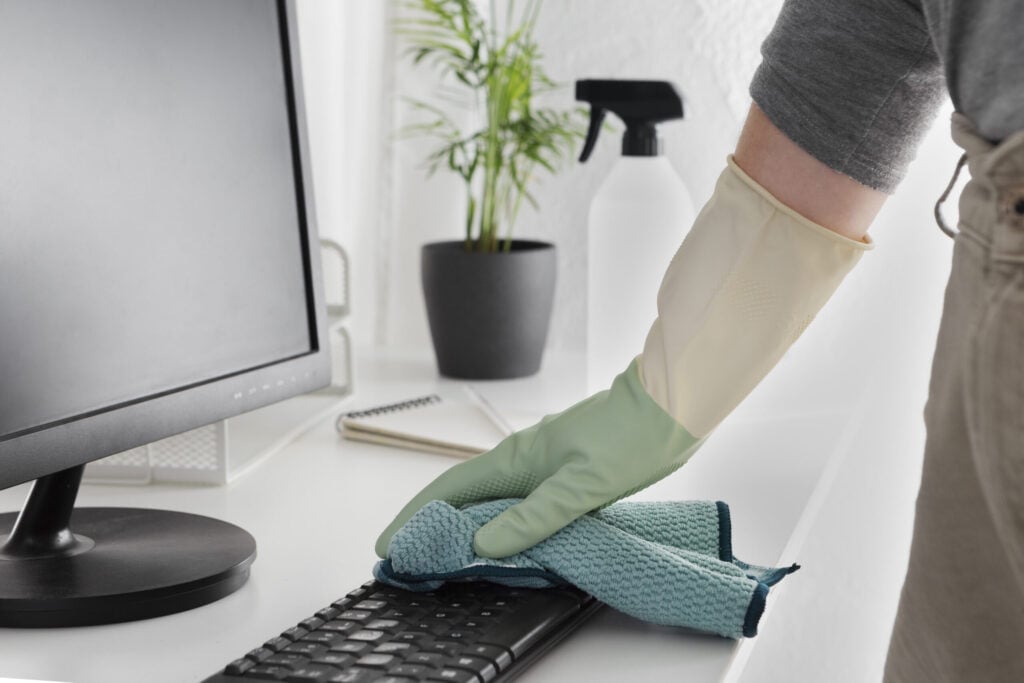
Cleaning is the floor, not the ceiling. The workplaces that come through flu season best combine professional office cleaning and disinfecting with three other moves.
Run an Employee Flu Vaccination Program
Vaccination remains the single most effective flu intervention available. Australian surveillance found that, in 2025, vaccinated people were roughly 56% less likely to attend a GP with flu and around 49% less likely to be hospitalised than unvaccinated people.
The catch is uptake. Only about 29.5% of Australians had received a flu shot by late July 2025. An on-site employee flu vaccination program removes the friction. Staff don’t have to take time off to visit a GP, and uptake rates jump significantly.
Get Your Sick Leave Culture Right
Presenteeism (coming to work sick) is worse for your business than absenteeism. A staff member with influenza in the office is a source of infection for everyone they come into contact with. Plenty of sick people admit to coming in anyway because they feel pressure to.
Workplace flu prevention starts with a clear, communicated policy: if you’re sick, stay home.
Make Hand Hygiene Frictionless
Stock hand sanitiser at every entry point, kitchen, and meeting room. Keep tissues and bins in workspaces. Put up signage in bathrooms – the basic “wash your hands properly” reminders shift behaviour.
How to Tell If Your Current Cleaning is Up to Scratch
A few honest questions to put to your current provider before May:
- What disinfectant do you use, and is it on the TGA’s ARTG with claims against Influenza A and B?
- What’s the contact time, and how do you ensure it’s met?
- During flu season, will you increase frequency on high-touch surfaces?
- Can you do an electrostatic decontamination clean if we have a confirmed case?
- Do your cleaners have specific training for medical, childcare, or school environments?
- How do you communicate when something needs attention – and how quickly?
If the answers are vague, generic, or “we’ll get back to you,” that’s your sign. Quality commercial cleaning in the Hunter Region should be specific and confident on every one of these points.
Get Your Hunter Region Workplace Flu-Ready Before Autumn
The 2025 flu season showed Hunter Region workplaces what a serious year looks like. With H3N2 subclade K still circulating and another season due to peak from May onwards, the businesses that prepare now will be the ones still operating at full capacity in July.
A bit of planning beats a lot of disruption. The right office cleaning and disinfecting setup, paired with sensible workplace flu prevention measures, makes the whole season manageable.
If your current setup isn’t cutting it, now is the right time to act. Commercial Cleaning Group are your commercial cleaners in the Hunter Region, servicing Newcastle, Maitland, Cessnock, Lake Macquarie, Singleton and beyond, and we tailor every cleaning plan to the environment we’re walking into. That means office cleaning and disinfecting protocols for your specific building, sector-appropriate products, and clear communication so you always know what’s been done and when.
Call us on 02 4962 4440 or get a free commercial cleaning quote – we’ll come out, walk through your premises, and put together something that fits.

Isaiah is the co-founder and Director at Commercial Cleaning Group, a Newcastle-based commercial cleaning provider servicing offices, strata, warehouses, schools, medical centres and aged care facilities across Newcastle, the Hunter Region and the Central Coast. He has spent the last 5 years in commercial cleaning and oversees operations and client accounts for the CCG team.
