

Your team has been sneezing through morning meetings, and your reception carpet has that dull, “winter has been here” look. Spring is a time of renewal, and that includes your workplace.
Spring is when most Newcastle and Hunter Region facilities realise their daily cleaning routine has been quietly losing ground for months. A proper commercial spring cleaning resets the building – tackling the dust, allergens, and grime that weekly cleans were never designed to reach.
This guide walks through what spring cleaning involves for a commercial space, how it differs across offices, clinics, warehouses, and strata buildings, and the jobs you should plan in now while the weather’s on your side.
Key Takeaways
- What it is: A scheduled deep clean that goes well beyond your daily or weekly contract – usually done once or twice a year.
- Best timing in Newcastle: September to early November, before peak humidity and pollen settle in.
- Who needs it: Offices, medical and dental practices, schools, warehouses, retail stores, and strata buildings.
- Why it matters: Better indoor air, fewer sick days, longer life on carpets and equipment, and a building that actually looks the way you want clients to see it.
Why Spring Cleaning is More Important Than People Think
Daily and weekly commercial cleans are designed for maintenance. They keep things ticking over. But they don’t address the slow build-up that happens behind office furniture, inside HVAC vents, on top of light fittings, and deep in carpet fibres.
A spring cleaning isn’t just cosmetic. It’s how you protect indoor air quality, meet your obligations under the SafeWork Australia Code of Practice for Managing the Work Environment and Facilities, and head off the small problems (mould patches, lifting carpet edges, scuffed hard floors) before they turn into expensive ones.
What’s the Difference Between a Regular Clean and a Spring Clean?
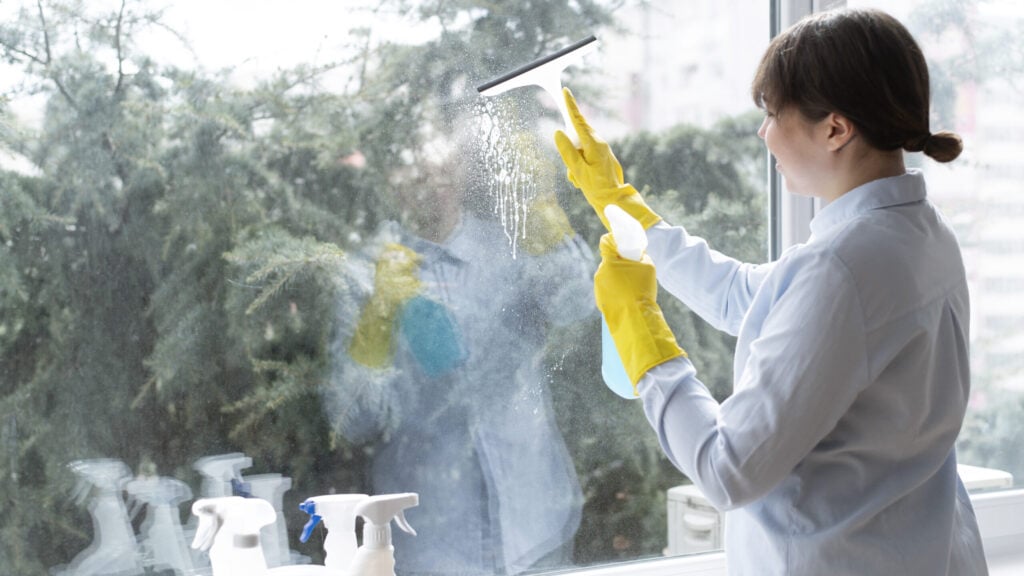
Your usual contract handles surfaces. Bins emptied, floors vacuumed and mopped, kitchens wiped down, bathrooms sanitised. That’s the visible layer of the building.
A commercial spring cleaning handles everything else. It targets the areas that don’t get touched in a 90-minute nightly visit because they don’t need to be touched that often. This includes:
- High-level dusting (light fittings, ceiling vents, tops of cabinets, exposed pipework)
- Carpet steam extraction or hot water extraction
- Hard floor strip and seal, or buff and polish
- Internal and external window cleaning, including frames and tracks
- Deep clean of kitchens, bathrooms, and breakout areas
- Air conditioning vent and diffuser cleaning
- Furniture and upholstery cleaning
- Wall washing and skirting boards
- Storage areas, server rooms, and back-of-house spaces
Done together, these jobs are far more efficient than tackling them one at a time throughout the year. That’s why most facility managers we work with bundle them into a single September or October booking.
Spring Cleaning Checklist for Commercial Spaces
Here’s a practical spring cleaning checklist you can adapt to your building. Walk through it with your cleaning provider before you book, so you know exactly what’s in scope and what isn’t.
Floors and Soft Furnishings
- Steam extract or hot-water extract all carpets and rugs
- Strip and reseal vinyl, polish hard floors, scrub and re-seal grout
- Clean entry mats and replace if worn (these are your single biggest dirt source)
- Spot clean upholstered chairs, lounges, and partition fabric
Air, Vents, and High Areas
- Vacuum return air vents and wipe supply diffusers
- Coordinate with your HVAC contractor on filter replacement
- Dust ceiling fans, light fixtures, exit signs, and exposed beams
- Clean tops of cupboards, lockers, server racks, and shelving units
Glass and Windows
- Internal and external window cleaning
- Frames, tracks, and sills (where mould often starts in the Hunter’s humidity)
- Glass partitions, reception screens, internal doors
Kitchens and Bathrooms
- Deep clean inside and behind fridges, microwaves, and dishwashers
- Descale taps, kettles, and coffee machines
- Scrub grout, regrout if needed, reseal silicone joints
- Sanitise high-touch points: door handles, light switches, lift buttons
Workstations and Common Areas
- Wipe down all desks, including under monitors and keyboards (with team consent)
- Clean phones, headsets, and shared peripherals
- Sanitise meeting room tables, whiteboards, and AV equipment
- Empty and wipe out filing cabinets, storage cupboards, and stationery drawers
Exterior
- Pressure wash entries, footpaths, and external bin areas
- Clean signage, awnings, and external glass
- Check and clean gutters where accessible
Spring Office Cleaning: What Newcastle Workplaces Should Prioritise
In office environments, three areas drive the greatest improvement after a spring office cleaning: carpets, HVAC systems, and shared spaces.
Carpets
Carpets in busy Newcastle offices accumulate roughly 1kg of soil per square metre every year, most of it tracked in from outside. By spring, that soil has worked itself into the fibres and is breaking them down. Hot-water extraction at the right temperature lifts it out, restores the pile, and removes the embedded allergens that trigger respiratory complaints once the air conditioning kicks in.
HVAC
When a building flips from heating to cooling, the system pushes air through vents that have collected winter dust. If those vents haven’t been cleaned, that dust ends up in the air your team breathes for the rest of the warmer months.
Shared Spaces
Kitchens, bathrooms, breakout zones, and meeting rooms all get heavy use and missed corners. A spring office cleaning resets these properly, including the bits your daily cleaner can’t get to without moving furniture or pulling out appliances.
If you’re managing an office space, our office cleaning in Newcastle team can build the spring deep clean into your existing schedule, usually after-hours, so your team walks back into a refreshed space on Monday morning.
Spring Cleaning for Medical Practices, Clinics, and Schools
Practices, clinics, and schools have a higher hygiene bar than standard offices, and spring cleaning needs to reflect that. The scope is similar to what we’ve covered, but with a few additions:
- Treatment rooms and consult rooms: Deep clean of beds, examination tables, and hard-to-reach surfaces. All high-touch points sanitised with TGA-listed disinfectants.
- Waiting areas: Upholstery cleaning is non-negotiable here. Waiting rooms see hundreds of patients a week, and the soft furnishings hold onto everything.
- Toy and play areas (paediatric or family practices): Full sanitisation, including hard-to-clean items.
- Schools and childcare: Deep clean of classrooms, libraries, gymnasiums, and playgrounds. Spring is the natural window for this work because it lines up with school holidays.
The same principle applies to dental clinics, allied health, and physiotherapy practices. Your daily clean keeps things compliant; the spring deep clean keeps the building presentable for new patients and protects your equipment from the wear-and-tear that builds up unnoticed.
Spring Cleaning for Warehouses and Industrial Sites
Warehouses are different. The dust profile is heavier, the equipment is larger, and the space is harder to clean while operations continue.
A proper spring clean for a warehouse typically includes:
- High-level dusting of beams, racking, and ceiling structures (usually done with elevated work platforms by trained operators)
- Floor scrubbing, sweeping, and re-line marking where needed
- Loading dock cleaning and pressure washing
- Office and amenities deep clean (the staff areas inside the warehouse footprint)
- External cleaning of bin areas, fence lines, and signage
Spring is a sensible window because pre-Christmas demand hasn’t kicked in yet, and you can usually find a Saturday or shutdown day to complete the bigger jobs. Our warehouse cleaning crews work with site managers across the Hunter to schedule around production rather than disrupting it.
Spring Cleaning for Strata Buildings and Mixed-Use Sites
Strata managers in Newcastle have their own spring cleaning rhythm, and it’s usually driven by AGM season. Owners walk through the building with fresh eyes after winter, and anything that’s been let go will come to light.
The spring strata clean usually focuses on:
- Common area carpets and hard floors (lobbies, hallways, lift wells)
- All glass: entry doors, internal windows, balustrades
- High-level dusting in common areas
- Bin room deep clean and pressure washing
- Car park sweeping and oil stain treatment
- External façade washing where accessible
Communication is the part most strata managers tell us they appreciate. We’ve found the best buildings are those where residents get a week’s notice, the work is scheduled to avoid weekend traffic, and there’s a clear point of contact for any issues.
If you’d like to compare options, we cover this in our strata cleaning in Newcastle service.
When Should You Schedule Your Spring Clean?
In Newcastle and the Hunter, the sweet spot is mid-September to early November. Here’s why:
- Winter humidity has dropped, so floors and carpets dry faster
- Pollen counts are still climbing, so cleaning before the peak makes sense
- HVAC is about to switch from heating to cooling – you want clean vents before that happens
- Most businesses haven’t hit the end-of-year crunch yet, so scheduling around your operations is easier
Book in 4-6 weeks ahead if you can. Quality commercial cleaners are tight on availability through September and October, so you’ll have more flexibility with dates if you plan early.
Should You Do It In-House or Hire Professionals?
In-house works for very small offices with simple layouts. For anything bigger, you’re going to run into some problems.
- Equipment: Hot-water carpet extractors, scrubber driers, rotary buffers, and elevated work platforms aren’t cheap to hire and aren’t easy to use well.
- Time: A 600m² office takes a professional crew of 3 about 8-10 hours to properly deep clean. Doing it yourself is realistically a weekend, and the result is rarely as good.
- WHS: Cleaning at height, working with stronger chemicals, and managing the risk profile of a deep clean takes the right insurance and training.
The other reason to outsource: an expert provider will pick up things you’d miss. We’ve found mould behind reception desks, a leaking pipe under a kitchen sink, and lifting vinyl seams that needed urgent attention.
Ready to Book Your Newcastle Spring Clean?
Spring is a short window in the Hunter, and the cleaners with the right equipment, insurance, and crews fill up quickly through September and October. If you’d like a walk-through and a quote for your building, our team at Commercial Cleaning Group covers Newcastle, Lake Macquarie, Maitland, Port Stephens, and the wider Hunter Region. We’ll talk through what your building actually needs (not a one-size-fits-all package), give you a clear price, and book you in around your operations.
Get a free commercial cleaning quote, and we’ll be in touch within one business day.
Frequently Asked Questions

Isaiah is the co-founder and Director at Commercial Cleaning Group, a Newcastle-based commercial cleaning provider servicing offices, strata, warehouses, schools, medical centres and aged care facilities across Newcastle, the Hunter Region and the Central Coast. He has spent the last 5 years in commercial cleaning and oversees operations and client accounts for the CCG team.
