
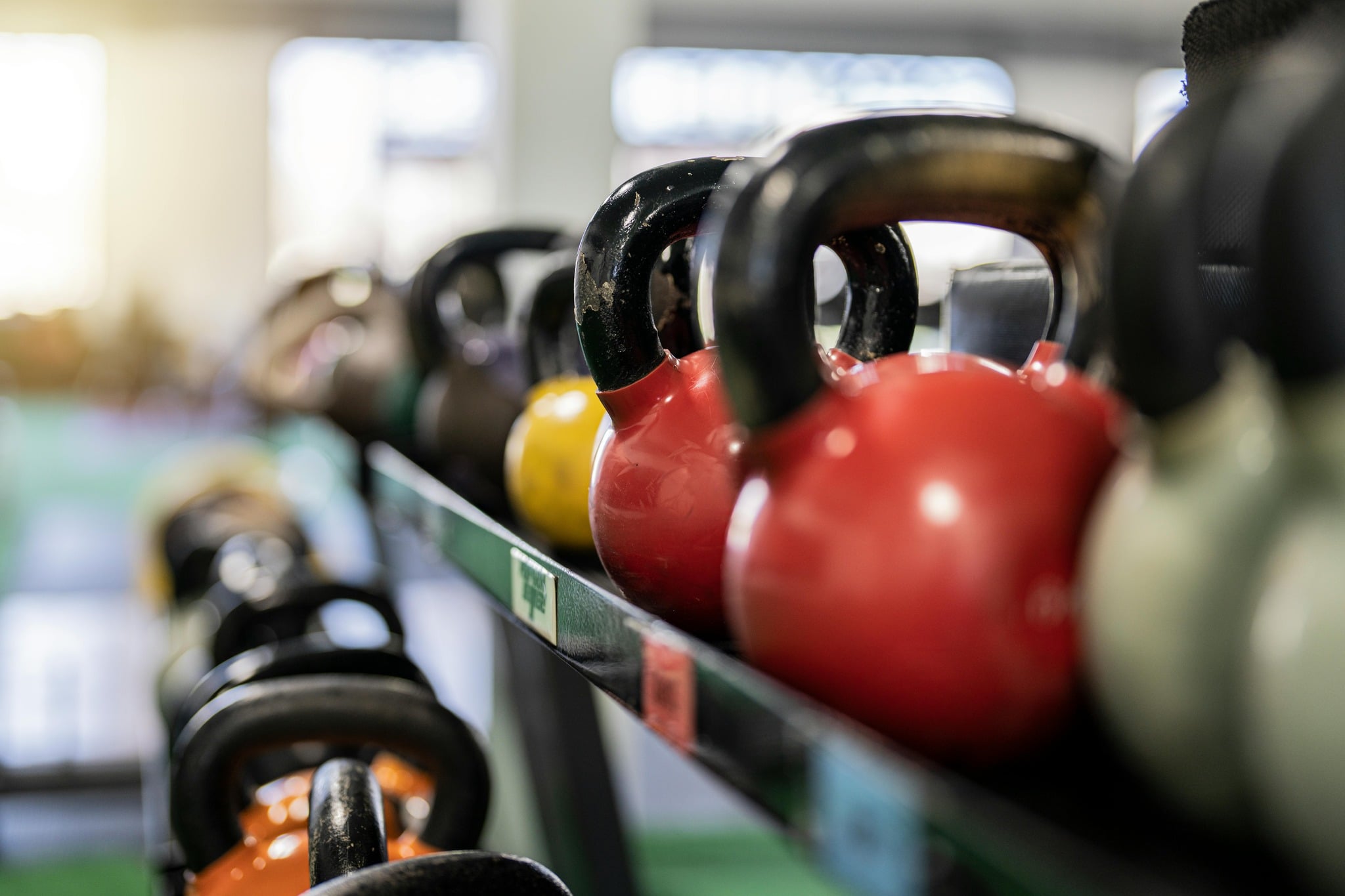
A single MRSA outbreak in your gym can shut you down for days, trigger an insurance review, and end up on Google reviews for years. The cause is almost always the same: a gap between routine cleaning and effective commercial gym cleaning that targets antibiotic-resistant bacteria.
Staph and MRSA are persistent, hard to kill, and they thrive in exactly the conditions a busy gym creates: warm, humid, full of sweat-coated shared surfaces, and constant skin contact. If you manage a gym, fitness studio, school PE facility, or workplace wellness centre, understanding how these pathogens spread and how cleaning can stop their spread is part of your duty of care.
Key Insights:
- Staph infections live on gym surfaces for days to weeks. MRSA can survive up to 14 days on plastic, vinyl, and laminated surfaces.
- Standard cleaning isn’t the same as disinfection. A wipe-down only removes visible sweat. Staph and MRSA are only killed when TGA-registered disinfectants are applied with the correct contact time.
- Australian gyms must meet Public Health Act 2010 and WHS Act 2011 obligations. Documented cleaning protocols are part of compliance.
- High-risk zones aren’t where you’d expect. Free weights, mat surfaces, and shared change-room benches have higher bacterial loads than toilets.
- Specialist commercial gym cleaning is the difference between a gym that occasionally has an outbreak and one that doesn’t.
What Are Staph and MRSA Infections?
Staphylococcus aureus (usually shortened to “staph”) is a bacterium that lives harmlessly on the skin and in the noses of around 30% of healthy people. It only becomes a problem when it enters the body through a cut, abrasion, or hair follicle. Then it can cause anything from a small boil to a life-threatening bloodstream infection.
MRSA is the version of staph that’s resistant to common antibiotics like penicillin and methicillin. According to the CDC, MRSA spreads quickly in athletic facilities because of shared equipment, skin-to-skin contact, and the kind of minor cuts and grazes gym-goers pick up without thinking twice.
Early symptoms look almost innocent – a red bump that resembles a pimple or spider bite. Within days, it can become a painful abscess. Untreated MRSA can lead to pneumonia, septicaemia, or worse.
How Staph and MRSA Spread in Gyms
Understanding transmission is the foundation of effective commercial gym cleaning. Three transmission paths matter inside a fitness facility:
- Skin-to-surface-to-skin contact. Someone with a colonised skin wound uses a bench. The next person sits on it. Bacteria transfer to a graze or pore.
- Shared equipment. Free weights, mats, resistance bands, and grip handles all hold sweat and skin cells.
- Shared textiles. Towels, hand wraps, and unwashed gym clothing transport bacteria between members.
Survival times are the part that most operators underestimate. A recent study tested MRSA on five common surface types and found the bacteria survived longest on plastic and vinyl – the materials used for most cardio machine grips, weight bench upholstery, and locker surfaces. Survival was measurable for at least five days, and other research has documented MRSA persistence of up to 14 days on laminated surfaces and 11 days on plastic.
Why Standard Cleaning Isn’t Enough
Routine wiping is cleaning, not disinfection. The two processes do different things:
- Cleaning removes visible dirt, sweat, and organic matter using detergents and mechanical action.
- Disinfection uses a chemical agent registered with the Therapeutic Goods Administration (TGA) to kill pathogens to a defined level.
You need both. Spraying disinfectant onto a surface that is still coated in sweat or skin oil does not work – the organic matter forms a barrier that protects the bacteria. The disinfectant kills the layer above the bug, not the bug itself.
A few other failures we see during gym deep cleaning audits:
- Wrong product class. General-purpose surface sprays often don’t carry TGA disinfectant registration, and even those that do may not be tested against Staphylococcus aureus.
- Insufficient contact time. Most quaternary ammonium disinfectants need 1–10 minutes of wet contact to kill MRSA. Wiping it dry after 10 seconds is ineffective.
- Cross-contamination from cloths. Reusing a sweat-saturated cleaning cloth across multiple machines spreads bacteria rather than removing it.
- Skipped textured surfaces. The knurling on barbells, the grip pattern on dumbbells, and the mesh on bench upholstery all trap bacteria where flat-surface wiping misses.
The CDC notes that focusing on surfaces that contact bare skin, with products effective against Staphylococcus aureus, a category that’s narrower than most retail “disinfectants” suggest.
Compliance Requirements: What Commercial Gym Cleaning Must Cover in Australia
Commercial gym cleaning in Australia isn’t just about hygiene best practice. It’s about meeting your legal obligations as a facility operator and proving you’ve met them.
The relevant frameworks for Newcastle and Hunter Region gyms include:
- Work Health and Safety Act 2011 (NSW): requires you to provide a workplace free of foreseeable health risks, which includes infectious disease transmission. SafeWork NSW enforces this.
- Public Health Act 2010 (NSW): sets sanitary standards for public premises, including wet areas and change rooms.
- Australian Standards: AS 1668.2 specifies ventilation requirements for exercise spaces (10 litres per second per person, double the rate for an office), which directly affects how quickly airborne pathogens dissipate.
- TGA registration: every disinfectant claiming to kill bacteria in commercial premises must be listed on the Australian Register of Therapeutic Goods.
- Insurance documentation: most public liability policies for fitness facilities require evidence of regular professional cleaning. A cleaning logbook isn’t optional if you ever need to claim.
Fitness Australia, the industry peak body, also publishes member-facility hygiene guidelines that align with these legal requirements.
Preventative Measures That Work
Equipment Disinfection Between Uses
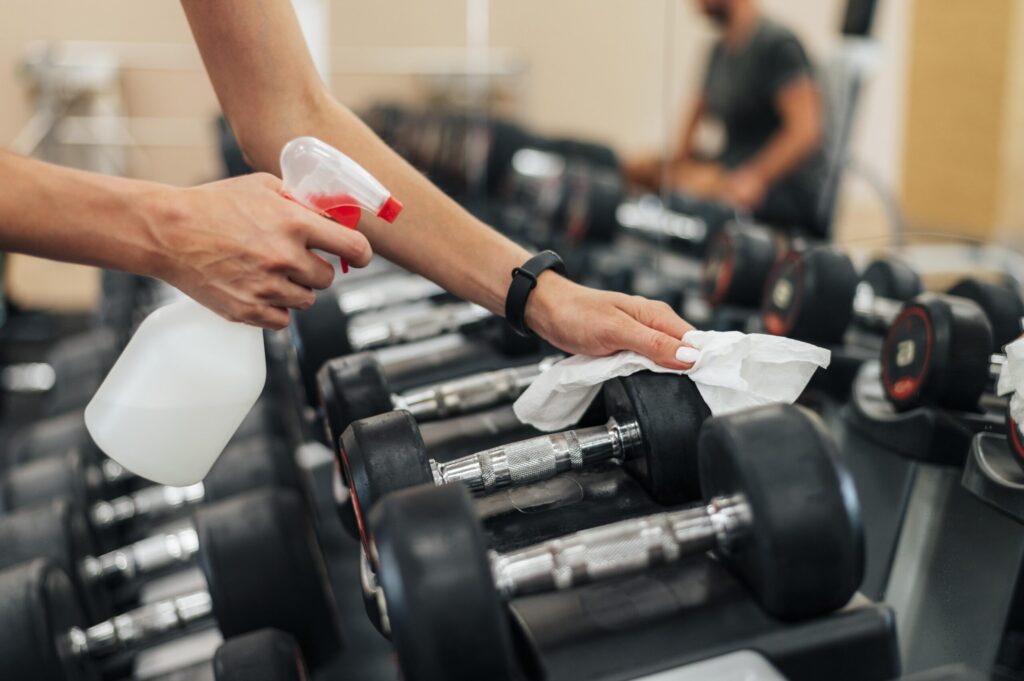
Place TGA-registered disinfectant spray bottles and disposable wipes at multiple stations. Visible signage prompting members to wipe down before and after use significantly increases compliance.
High-Touch Surface Schedule
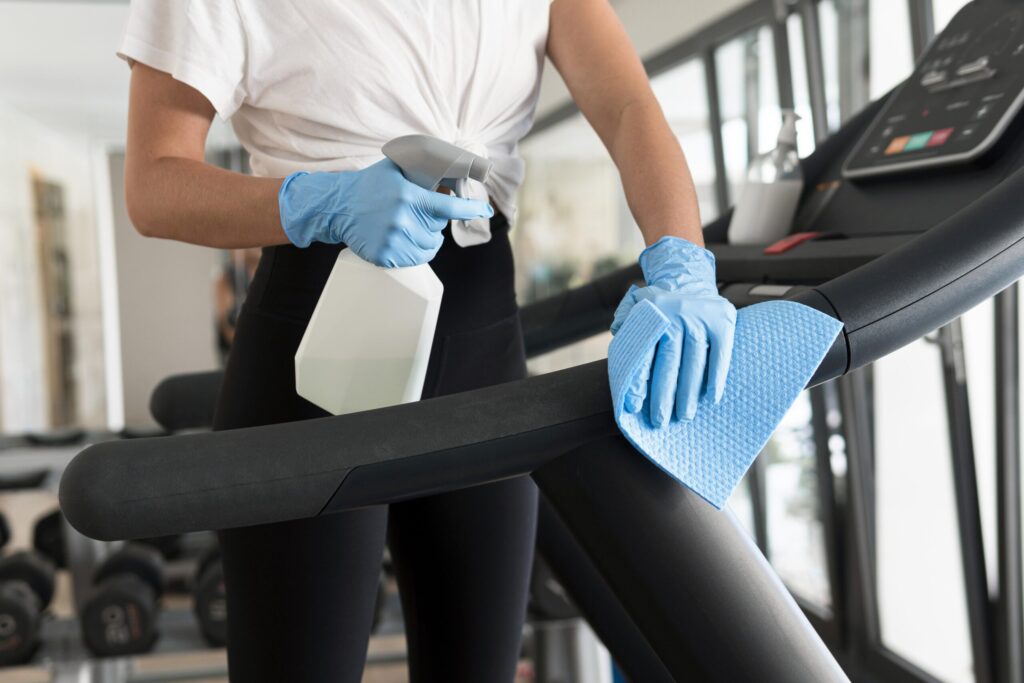
Beyond equipment, identify every surface a hand or bare skin touches: door handles, light switches, drink fountains, locker latches, tap handles, change room benches, sauna seating. Effective gym disinfection on these high-traffic points needs to happen multiple times per shift in a 24/7 facility, and at minimum twice daily in a standard-hours gym.
Wet Area Protocols
Showers, change rooms, and pool decks need different chemistry. Sodium hypochlorite (chlorine-based disinfectants) at appropriate dilution rates is the standard for dermatophyte and bacterial kill on tile, but it’ll damage rubber matting and timber sauna benches. A specialist gym cleaner in Newcastle will use hydrogen peroxide alternatives on sensitive substrates.
Mat and Soft Surface Care
Yoga mats, stretching pads, and bench upholstery harbour bacteria deep in their texture. These need enzymatic cleaning followed by disinfection – a two-step process that flat wiping won’t replicate.
Towel and Laundry Standards
If you supply towels, they need to be washed in water above 60°C and dried completely in a heated dryer. Air drying isn’t sufficient. Used towels should be collected in dedicated bins, not stacked with clean towels.
Hand Hygiene Infrastructure
Touchless hand sanitiser dispensers at entry, exit, and high-circulation areas. Soap dispensers (liquid, never bar soap) in every wet area. The CDC notes that hand hygiene before and after equipment use is one of the single most effective interventions.
Member Education
Signage is important, as is training your floor staff to politely prompt wipe-down behaviour. Cleaning teams can only achieve so much between shifts. Cultural compliance from members fills the gap.
Building Long-Term Sanitisation Standards
A one-off gym deep cleaning won’t hold the line. What works is a tiered gym deep cleaning schedule with documented accountability:
- Daily – between-use equipment disinfection by members and staff, change room and toilet sanitisation, mat disinfection, high-touch surface wiping, floor mopping with appropriate disinfectant.
- Weekly – deep clean of all weight equipment, including knurled grips, locker interiors, mirror and glass surfaces, vent grilles, and drain treatment in wet areas.
- Monthly – HVAC filter inspection or replacement, descaling of shower heads, tile grout treatment, comprehensive audit of disinfectant stock and contact-time compliance.
- Quarterly – carpet extraction in reception or office areas, deep clean of upholstered cardio equipment, review of cleaning protocols against current TGA listings and any updated NSW Health guidance.
The key requirement is documentation. If you can’t show a logbook, you can’t prove compliance to an insurer, an auditor, or a member who’s asked the question.
Why a Specialist Commercial Gym Cleaning Partner Matters in Newcastle
General office cleaners aren’t trained for fitness environments. Commercial gym cleaning uses different chemistry, treats different surfaces, and carries different consequences when it’s done wrong.
At Commercial Cleaning Group, we provide documented gym cleaning for Newcastle facilities. Our teams use only TGA-registered disinfectants, follow equipment manufacturer guidelines to avoid voiding warranties, and deliver cleaning logs that integrate with your WHS records. We deliver gym deep cleaning on a documented schedule and run between-clean disinfection routines targeted at the surfaces that actually drive infection risk. We also work across related sectors – medical centre cleaning services, office cleaning, and retail cleaning services – so the infection-control standards we apply to a clinic carry through to your gym floor.
If you’d like to know what proper gym disinfection looks like in your facility, get a free gym cleaning quote and we’ll walk through your current setup with you.
Frequently Asked Questions

Isaiah is the co-founder and Director at Commercial Cleaning Group, a Newcastle-based commercial cleaning provider servicing offices, strata, warehouses, schools, medical centres and aged care facilities across Newcastle, the Hunter Region and the Central Coast. He has spent the last 5 years in commercial cleaning and oversees operations and client accounts for the CCG team.
